Schaumburg Epoxy Flooring brings more than 20 years of work to epoxy-flooring in Schiller Park, and the floors we are asked about most here belong to small manufacturers rather than showrooms. A slab under a lathe, a mill or a saw has usually spent years taking cutting oil, coolant and steel chips, and it needs a different plan than a clean warehouse aisle.
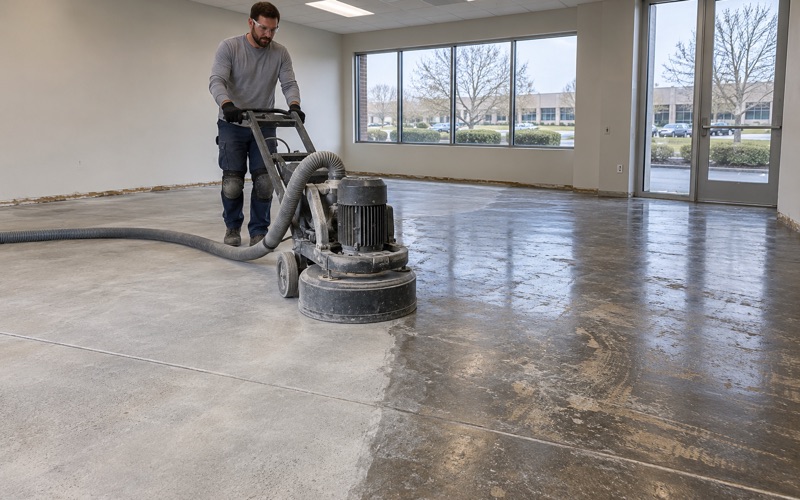
That plan starts with honesty about the concrete. We open every slab with a diamond grinder or a shot blaster, never with acid, and we look hard at the cracks and any old paint before we write a number down. When a floor needs repair or oil removal before it can hold a coating, the proposal says so in plain words instead of leaving it for a surprise halfway through the job.
The same proposal names the product, the system build and the finished thickness, so a shop owner can check what was quoted against what went down. Moisture testing sits on it as its own line, because a shop floor that wicks water from below will lift a coating no matter how well it was ground.
From Travel Businesses to Machine Shops
In plain words, the village’s FY2024 annual financial report says Schiller Park’s 400-plus businesses range from hospitality-related travel businesses to machine shops, which is about as direct a statement of the local commercial floor as a contractor gets. On a village of 2.77 square miles, commercial property made up 55 percent of the 2023 equalized assessed value, so a lot of the concrete here carries a business rather than a family car. The report also places the village at a crossroads of commerce, with the Tri-State Tollway among the routes it names.
Who the Village Counts
The principal-employer table in that same report comes from the village’s own business-license records. Arpac sits second on the 2024 list at 435 employees, with MJ Celco at 225 and Encore Group USA LLC at 200 a few lines down. We have not toured those buildings and will not guess at what they make, but the list tells us that sizable working floors sit inside village limits, not just storefronts along the arterials.
What That Means for a Floor Quote
A machine shop floor is judged on different terms than a garage. It has to shed oil, survive steel dropped from waist height, take hard cart wheels all shift and stay cleanable around equipment that cannot move. We size the system to that workload, which usually means a thicker build than a homeowner would ever need and a textured finish where people stand in coolant.
Garages on Older Slabs
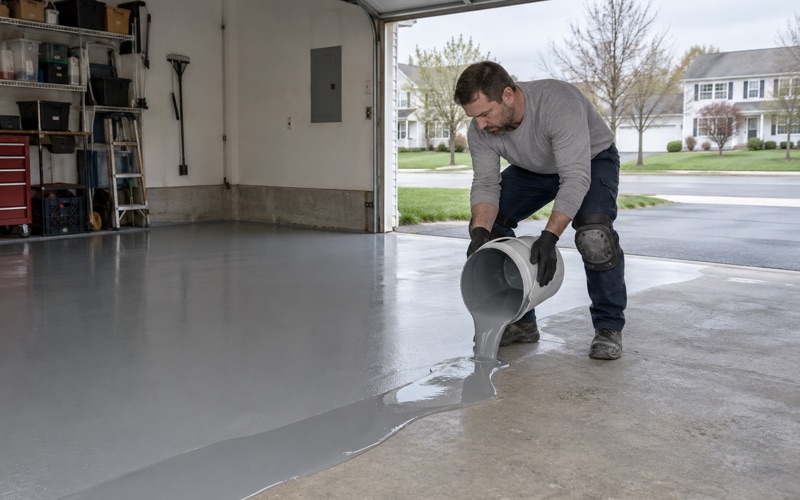
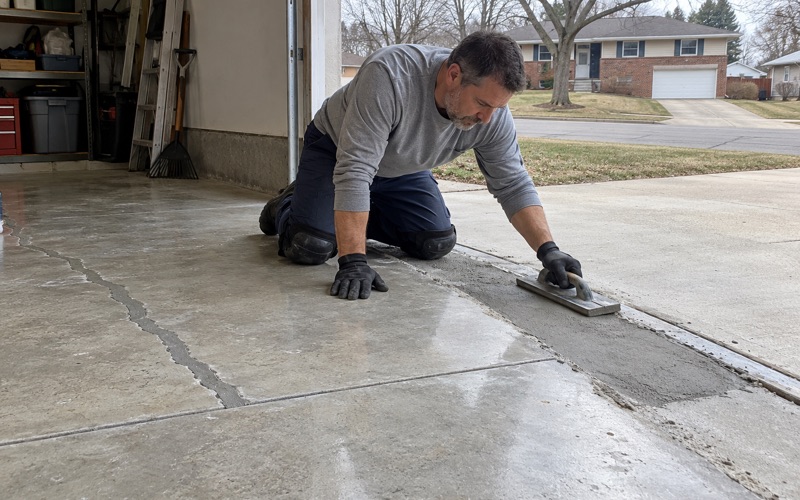
Houses still make up much of the village, and Schiller Park’s housing stock stopped growing before 2010, with most of it built in the 1950s and 1960s. A garage floor here is an existing slab, often with old paint, patches and decades of hairline cracks, so the work is repair and recoat rather than coating fresh concrete. Every home job gets a written contract and the state’s consumer-rights pamphlet before we start, as the Illinois Home Repair and Remodeling Act requires.
Who Signs Off in the Village
Work in Schiller Park answers to the village, not to the state. Illinois issues no license for flooring or coatings, so we confirm the village’s contractor registration, bond and insurance requirements before a date goes on the calendar. We also ask the Community Development Department, whose staff includes a Building Official, a Permit Coordinator and inspectors, whether a given coating job is treated as decorating or needs a permit, rather than assuming either answer.
Looking for epoxy-flooring closer to Northlake? See Epoxy-Flooring Services in Northlake.
Cutting Oil, Coolant and What Soaks Into the Slab
Concrete is porous, and years of cutting oil do not stay on the surface. Oil migrates down into the slab, and a coating laid over it can look fine for a few weeks before the oil pushes back up and breaks the bond. That is a common reason a shop floor coating fails, and it is the first thing we test for.
Testing for Contamination
Before quoting, we check the stained areas to see whether water beads or soaks in, and we grind small test patches to see how deep the discoloration runs. A light film often comes out with degreasing and mechanical prep. Heavy saturation around a long-running machine may need repeated cleaning, an oil-tolerant primer or, in the worst spots, cutting out and patching the concrete, and we say which one before the job is sold.
Grinding to the Right Profile
The grind is aimed at a specific ICRI concrete surface profile, matched to how thick the system is going on. A thin topcoat needs a lighter profile than a troweled urethane cement, and we check the result against the reference chips before priming. Getting that right is what lets a new coating grip a slab that oil once sealed.
Coolant and Chemical Exposure
Water-based coolants keep a floor wet for long stretches, and many are alkaline enough to stain or soften a thin, cheap coating. A 100% solids epoxy base gives a dense, chemical-resistant film without the solvent that thinner products rely on. Where a floor sees hot washdown or heavier chemical exposure, urethane cement is often the better answer, and we explain the trade-offs in cost and finish before anyone commits.
Moisture from Below
Oil is not the only thing coming up through a slab. We run ASTM F1869 calcium chloride tests or ASTM F2170 in-situ relative humidity probes as the job calls for, and compare the results against the coating maker’s limits. If the numbers are high, a moisture-mitigation primer goes into the scope, and moisture is the first exclusion we read aloud when we walk through the warranty.
Chips, Dropped Stock and the Machines That Stay Put
Steel chips are small, sharp and everywhere in a working shop. Under boots and cart wheels they act like sandpaper, and a smooth, thin coating shows scratches and wear paths within months. Dropped bar stock and tooling add impact on top of that abrasion.
Building for Abrasion and Impact
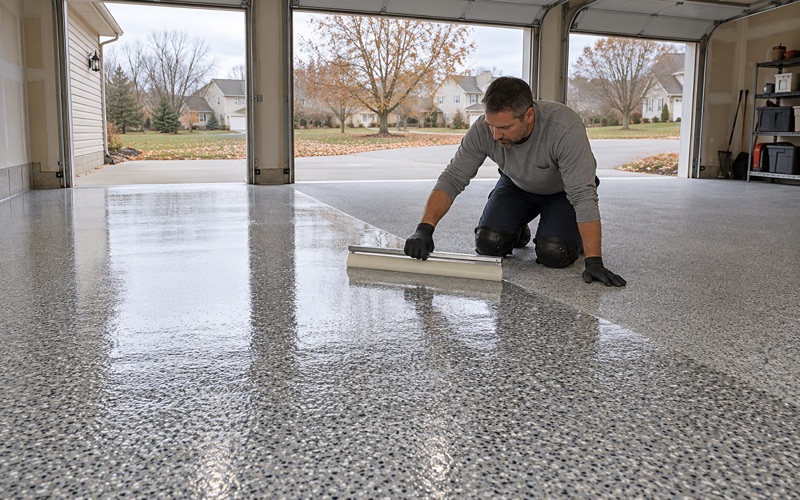
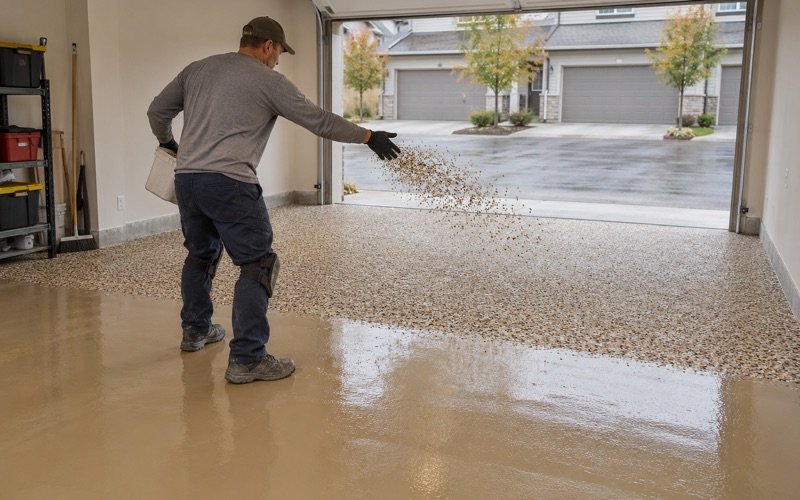
We answer chips and impact with film thickness and aggregate. A quartz aggregate broadcast locked between epoxy coats gives the floor a hard, textured wearing surface and keeps footing sure where coolant collects. For the topcoat, a polyaspartic or polyurea layer adds abrasion resistance and cures quickly, which matters on a schedule we will come back to below.
Not Every Square Foot Needs the Full Build
A raw-stock rack area or a dry assembly corner sees far less oil than a cutting cell. In spots like that, a ground floor treated with a lithium silicate densifier can be a lower-cost choice, while the machine areas get the full epoxy system. We price both options so the owner decides where the money goes.
Carts, Pallet Jacks and Traffic Lanes
Hard-wheeled carts and pallet jacks concentrate their load on a small contact patch and roll the same paths every day. We look at where those lanes run before we grind, because a joint, a spall or an old patch in a traffic lane will telegraph through any coating laid over it. Those spots get repaired first, and we are clear that a coating is a film that follows the slab under it, so it will not stop a moving crack from reappearing.
Coating Up to Anchored Equipment
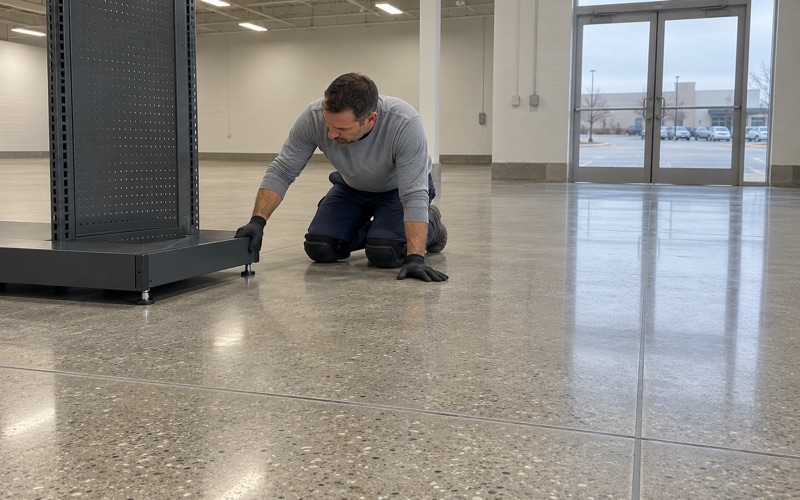
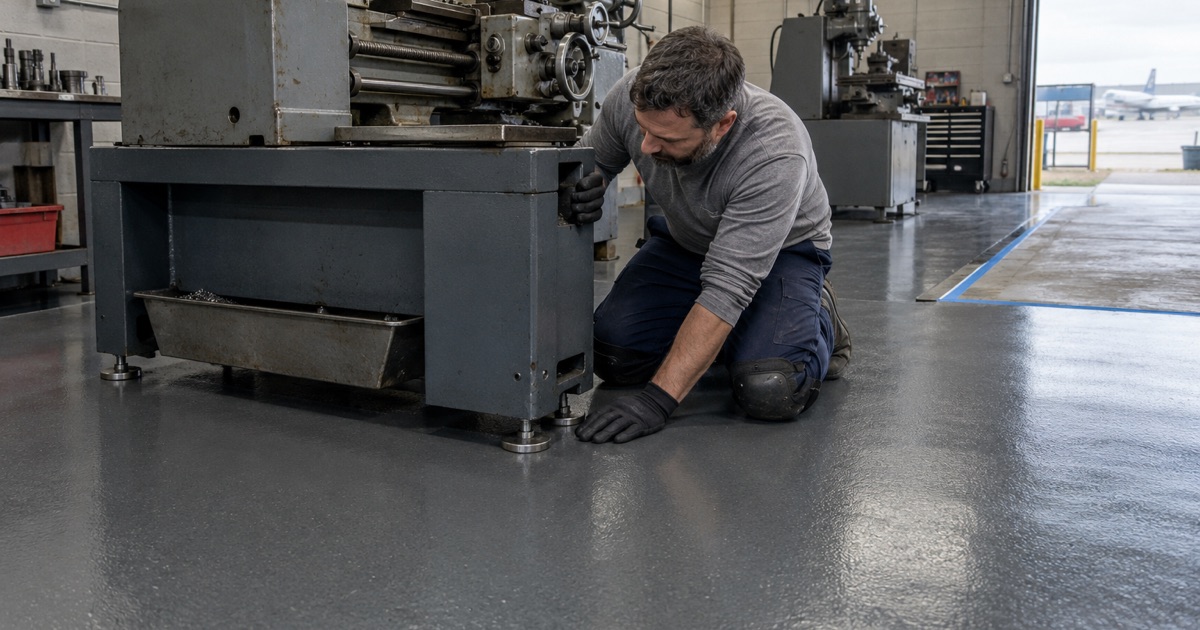
Most machine tools are leveled and bolted to the slab, and moving them is a rigging job with its own cost and risk. We plan to coat up to and around the machine bases rather than under them, grinding as close as the equipment allows and finishing the edge so oil cannot creep under the new film. Where a shop is about to relocate a machine anyway, we can schedule around that move and coat the freed footprint before the machine lands in its new spot.
Lines, Walkways and Housekeeping
Once the field coat is down, safety striping and marked walkways are easier to keep visible on a uniform surface than on bare, oil-stained concrete. A coated floor also makes daily chip sweeping and spill cleanup faster. That housekeeping benefit is often what convinces a shop owner the downtime is worth it.
Doing the Floor in Sections So the Shop Keeps Running
Very few shops can close for a week while a floor is coated. We break the work into zones that match how the shop is laid out, so one bay or a row of machines is out of service while the rest keeps cutting. Each zone is ground, primed, built and topcoated as its own unit, then the crew moves to the next.
Nights, Weekends and Fast-Cure Topcoats
Commercial and industrial work is scheduled around the hours the building has to stay productive, including overnight shifts and weekends. Faster-curing polyaspartic topcoats help here, because a section coated on a Friday can often take foot traffic and light carts sooner than a slower system would allow. We tell the shop up front how long each area stays closed to forklifts and heavy loads, not just to walking.
Curing Against the Conditions, Not the Calendar
Cure times depend on the temperature of the slab and how far it sits above the dew point, not on what the schedule says. In a shop with big overhead doors, the concrete near the openings can run cooler than the floor in the middle of the building. We measure before each coat, and if conditions in a zone are not right, we shift the order of work rather than push a coating onto a cold or damp slab and risk amine blush or a soft film.
Dust, Fumes and Neighboring Work
Grinding is done with dust collection connected to the machines, and we coordinate with the shop on covering nearby equipment and parts. Coatings are chosen within the Illinois limit on VOC content, a rule that binds the installer as well as the manufacturer. We walk the shop’s lead through what will be applied, where and when, so the crews working the next zone over are not caught off guard.
When the Job Wraps
At the end, the shop has a floor documented section by section, with the product and thickness for each area on paper. If a zone needs touching up after a machine move or a hard impact, that record tells us exactly which system to match. It is a practical way to keep a working floor in shape for years without starting over.
- 20+ Years Coating Floors
- Moisture Tested Before Coating
- Written Contract on Every Home Job