Schaumburg Epoxy Flooring has spent more than 20 years on epoxy-flooring in Norridge and the surrounding suburbs, and the first conversation we have about a floor here is rarely about color. It is about paperwork: whether the job needs a permit, whether our registration is current for the month the work lands in, and which insurance certificate the village wants on file.
We settle those questions before a date goes on the calendar. A homeowner who books a coating and then learns the village has questions about it loses a week, sometimes more, and the slab sits half prepared in the meantime. Getting the administrative side right first is the cheapest part of the job and the part that most often goes wrong when nobody owns it.
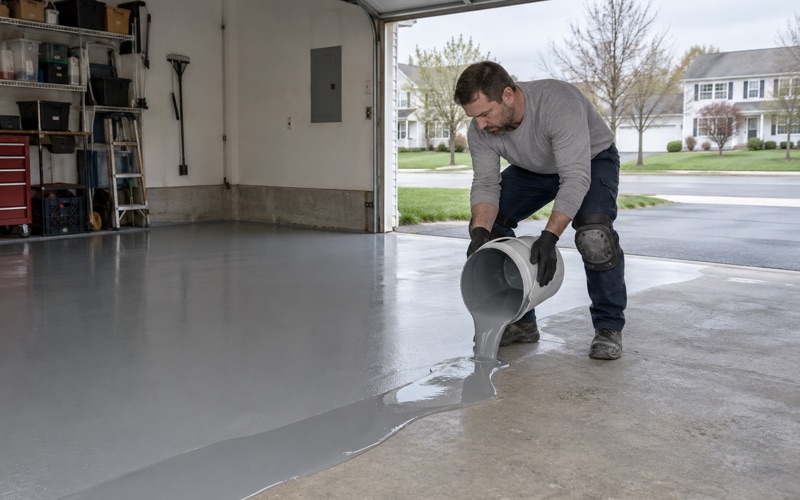
Once the paperwork is clear, the floor itself gets the same treatment it would anywhere. We grind or shot blast the slab open, test it for moisture as a priced line item, and hand over a proposal that names the product, the build and the finished thickness.
A floor upgrade is a permit question here
The Village of Norridge states that all construction, remodeling or upgrading of property requires a permit. That is a broad sentence, and a floor coating sits close enough to its edge that we do not guess which side it falls on.
The village decides what counts as upgrading
Whether a coating on an existing garage slab is decorating or an upgrade is not something we have seen settled in writing, and it is not our call to make. The village building department makes it. Before we schedule a job, we ask the permit desk directly how it reads the work we are proposing, and we pass the answer along to the owner.
That question gets asked with the real scope in hand. A thin clear sealer, a full flake broadcast system with a polyaspartic topcoat, and a job that starts with cutting out and patching a cracked section of slab are three different pieces of work. The answer for one does not carry over to the next.
Why the scope has to be written down first
A permit desk can only answer the question it is asked. So the proposal we send names the coating system, whether that is 100% solids epoxy, a urethane cement or a polyaspartic build, along with the surface profile we are grinding to and the finished thickness. If crack repair or a patch is needed before the slab can take a coating, that is written in as its own line rather than folded into a lump sum.
That same document is what the owner checks against the floor when we finish. One piece of paper serves both purposes, and nobody has to reconstruct what was promised.
When the answer comes back
If the village wants a permit, it goes on the schedule before the grinding does. If it does not, we note who we spoke with and when. Either way, the job starts with the question answered rather than assumed.
Looking for epoxy-flooring closer to River Grove? See Epoxy-Flooring Services in River Grove.
Registration runs January to December, whatever month it starts
Contractor registration in Norridge is annual and runs by the calendar year. That detail matters more than it sounds. A registration taken out in March and one taken out in late November both end on December 31, so the month a contractor signs up decides how many months of coverage that registration actually buys.
The December 31 reset
For an owner, the practical point is simple. A contractor who was registered with the village for a job in the spring is not necessarily registered for a job in January. We confirm our own standing against the year the work will actually happen in, not the year the proposal was written in.
That check is ours to make, and we make it before we ask for a deposit. An owner should not have to chase it.
The same logic applies to anyone else an owner is weighing for the job. Asking a contractor which calendar year its village registration covers is a fair question, and the answer should be specific. A vague reply about being registered somewhere in the area does not tell an owner much about a job in Norridge.
Booking a floor in November or December
A floor sold in the last weeks of the year is the case where the calendar earns its attention. A proposal signed on December 10 for work starting January 6 crosses the reset, and the registration that was valid when the contract was signed may not be the one in force when the grinder arrives.
We plan for that. If a job is quoted late in the year, we confirm with the village that our registration for the coming year is in place before the start date, and we tell the owner which year’s registration covers the work.
A job split across the new year
Occasionally a job starts in late December and finishes in the first days of January: grinding and repair before the holiday, coating after it. We treat that as two calendar years of work and confirm both registrations are in order. If a permit is involved, we ask the village how it wants the year boundary handled rather than assuming a permit taken in one year simply carries over.
Slab temperature and dew point at the surface are a separate question from the calendar. We measure those on site on the day and schedule the cure around the readings, whatever the date on the registration says.
What the Village of Norridge asks for: registration, insurance, a permit
Illinois issues no state license for flooring or coatings work, so no contractor here can honestly call itself state licensed for epoxy. What a village asks for instead is its own registration, bond and insurance, and Norridge is specific about each.
Registration and a trade bond naming the village
Registration with the village is required for all commercial projects and for a list of residential work that includes new construction, additions and remodels. Alongside it, the village asks for a trade-specific original license and a $10,000 permit bond naming the village. Registration is not a trade license, and we never describe it as one.
A certificate of liability insurance naming the village
Norridge also asks for a certificate of liability insurance that names the village. It is a different document from the certificate a homeowner might ask for personally, and we provide both when both are wanted. On a commercial job, a property manager or landlord will often want their own certificate too, and we sort that out at the same time.
The written contract the state requires
The state layer sits on top of the village one. Under the Illinois Home Repair and Remodeling Act, every home job we take gets a written contract and the Home Repair: Know Your Consumer Rights pamphlet before any work begins. The contract is where the warranty exclusions are spelled out, and moisture is the first one we name.
We also choose coatings within the Illinois limits on VOC content for architectural coatings, which apply to the installer as well as the manufacturer. And we do not sell a floor coating as radon reduction, because that work in Illinois requires a state radon mitigation license from IEMA.
Fire-code questions, and the slab under the paperwork
Norridge sits in Norwood Park Township, Cook County, and with Harwood Heights forms an enclave inside the City of Chicago. A local improvement association incorporated it as a village in 1948, stymieing an effort by Chicago to annex the area. That history is why the questions on this page go to a village desk and not a city one.
The Norwood Park Fire Protection District
Fire protection here does not come from a village department. The Norwood Park Fire Protection District serves Norridge, Harwood Heights and unincorporated Norwood Park Township from one station on Lawrence Avenue in Harwood Heights. If a commercial floor raises a fire-code question, such as how coating materials are staged on site or how exits are kept usable while a floor cures, that is the district’s question to answer, and we ask it there.
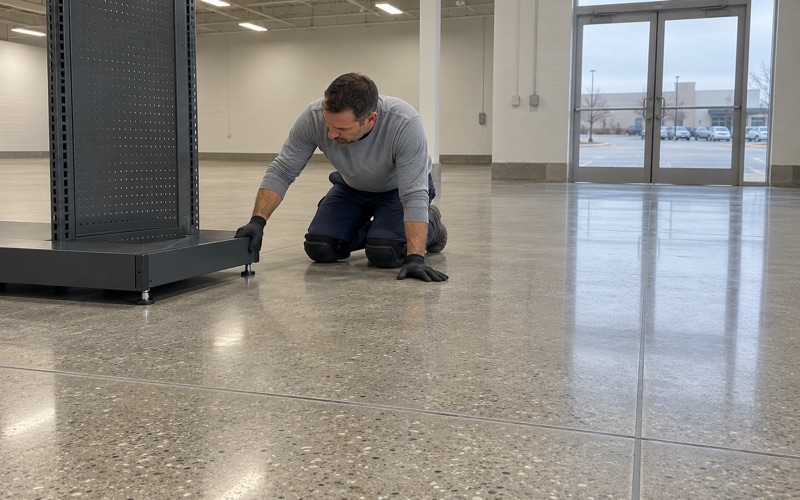
Commercial floors in the village bring a scheduling question as well. Store, restaurant and office floors are planned around the hours the building has to stay open, which can mean overnight work or a window between one lease and the next. We fit grinding, coating and cure into that window and tell the owner up front how long the space will be out of use.
The garages most of the work is in
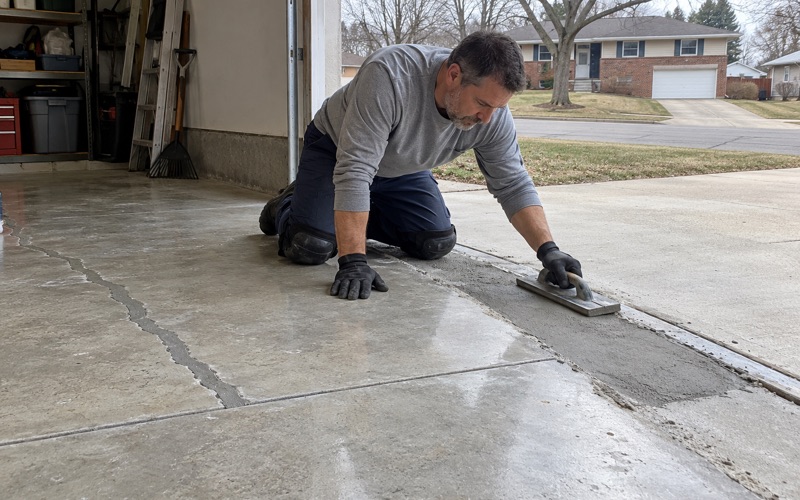
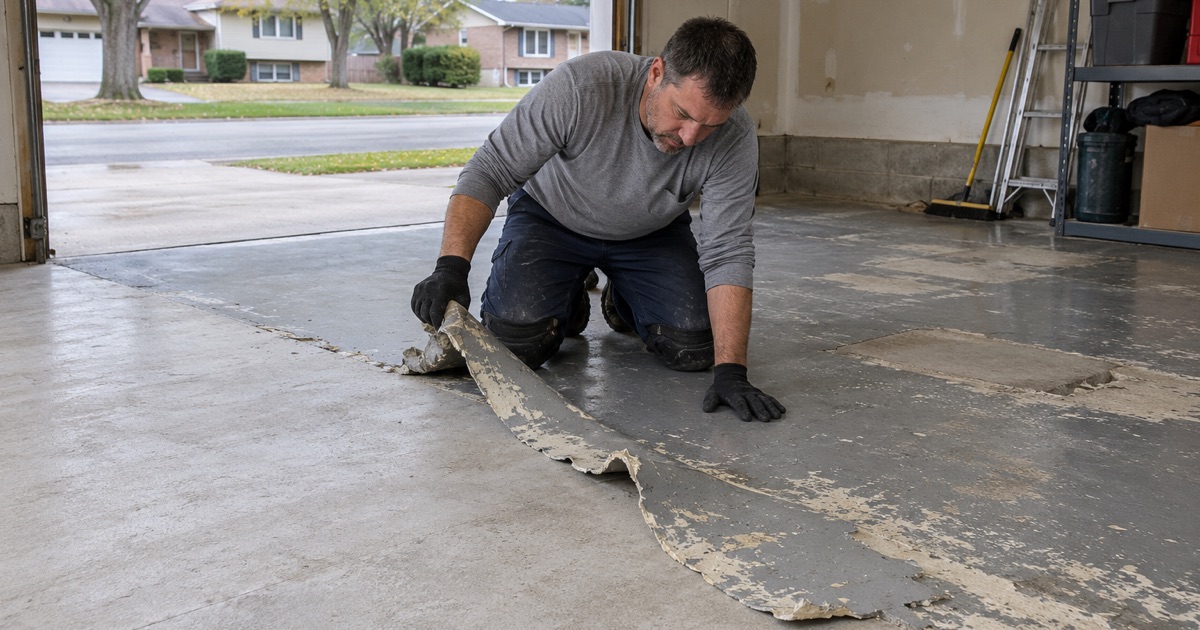
Of the occupied homes in Norridge, 3,971 are owner-occupied detached houses, and most of the housing was built in the 1950s and 1960s. A garage slab of that age has often seen decades of oil, old paint or a previous coating, and patches of its own. We read the cracks and the existing finish before we quote and say plainly if the slab needs repair before it can take a coating.
We also say plainly what a coating cannot do. It is a film that follows the concrete under it, so a moving crack will tend to show through, and we tell owners that before the job rather than after.
Prep and testing we do not skip
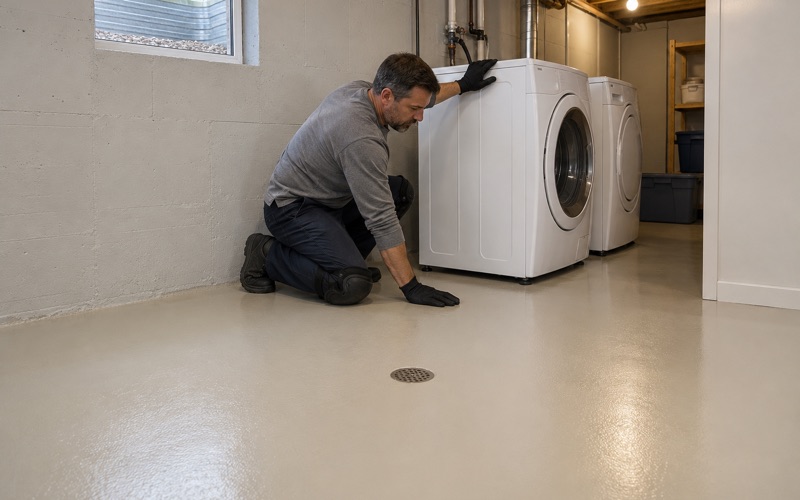
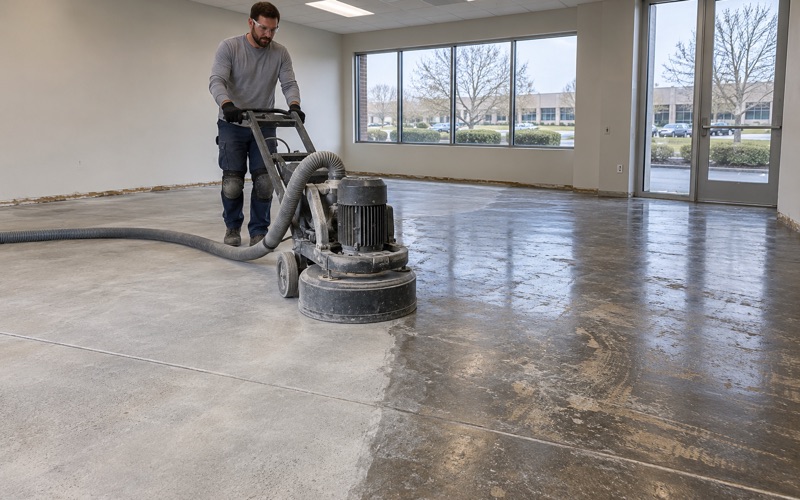
Every slab is opened with a diamond grinder or shot blaster to an ICRI CSP profile suited to the system; we do not acid etch. Moisture testing is part of the quote, using an ASTM F1869 calcium chloride test or ASTM F2170 in-situ relative humidity probes depending on the slab. Even a newer garage slab is tested, since the model code exempts garages from an under-slab vapor retarder.
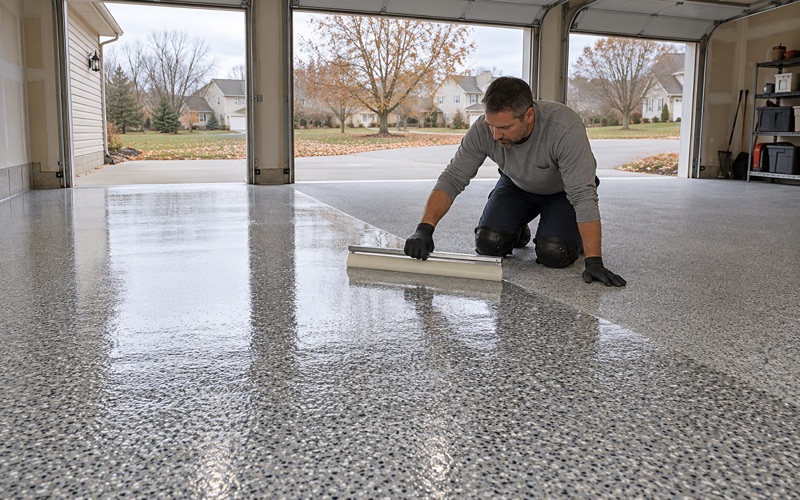
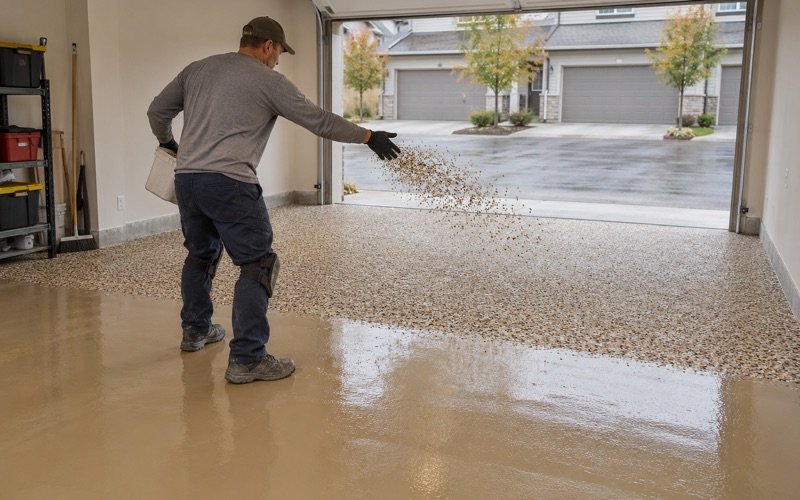
The finished system is built for what a winter actually tracks in: calcium chloride brine and rock salt on the tires. A flake or quartz broadcast under a polyaspartic topcoat holds up to that and to hot tire pickup, which is why it is the build we recommend most often for a Norridge garage.
- 20+ Years Coating Floors
- Moisture Tested Before Coating
- Written Contract on Every Home Job