
Schaumburg Epoxy Flooring installs metallic epoxy floors in Schaumburg, IL, serving surrounding cities including Wood Dale, Bensenville, Barrington, Prospect Heights and Winfield. A metallic floor is the most hands-on finish we build, and more than 20 years of grinding and coating slabs is what lets us get the preparation right before the color goes down.
Metallic epoxy gets its look from fine metallic and pearlescent pigments suspended in a clear, self-leveling epoxy. While the resin is wet, the installer moves those pigments with rollers, brushes, sprayed solvent and air to create clouds, swirls and depth. Once the resin cures, that movement is locked in place under a clear topcoat.
The result reads like poured stone or liquid metal, and no two floors are the same. That uniqueness is the appeal, and it is also why we spend time on samples and expectations before a single batch is mixed. A metallic floor done well is a centerpiece; one done badly is a very glossy reminder of every shortcut.
Residential Metallic Epoxy Floors
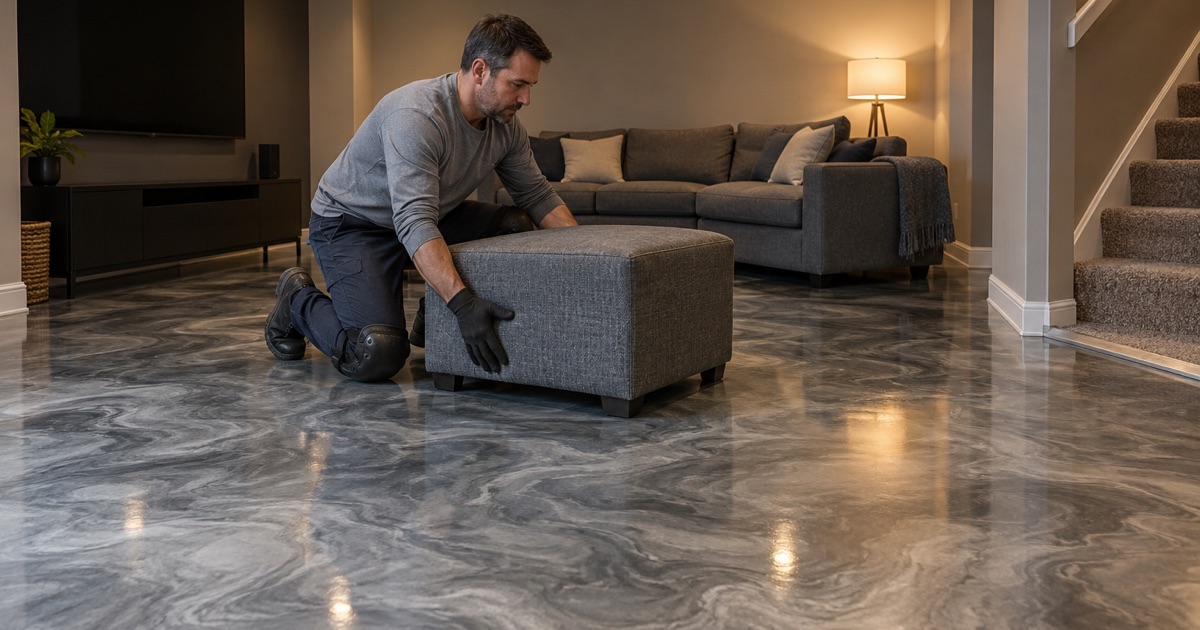
Finished Basements and Media Rooms
Basements are where most of our residential metallic floors go. A dark metallic with silver or copper movement suits a media room or bar, while lighter pearls and grays brighten a basement with little daylight. The epoxy is easy to clean and holds up to furniture, kids and the odd spilled drink.
As with any basement coating, moisture decides first. A metallic floor is a thick, continuous epoxy film, and vapor pushing up from the slab will lift it just as surely as it lifts a plain coating. We test the slab before any color is chosen, and on a high reading we put a moisture-mitigation primer under the system.
Kitchens, Mudrooms and Main-Level Slabs
On slab-on-grade homes and additions, a metallic finish can run through a kitchen, mudroom or great room. These areas see grit tracked in from outside, so we pair the metallic body with a durable clear topcoat and talk through mats at the doors. Near entries, a satin topcoat hides fine scratches better than high gloss.
Home Bars, Gyms and Hobby Rooms
A home bar is a natural fit for a metallic floor, and so is a hobby room or studio where the floor is part of the décor. Home gyms are a harder case: dropped weights chip any coating, so we recommend rubber mats in the lifting area and a metallic finish around them.
In any of these rooms, think about what sits on the floor. Rolling office chairs, heavy furniture legs and bar stools all leave fine scratches in a glossy topcoat over time. Chair mats, felt pads and a satin sheen keep a residential metallic floor looking new far longer, and a worn topcoat can later be abraded and recoated without disturbing the color underneath.
Commercial Metallic Epoxy Floors
Showrooms and Retail Spaces
Car showrooms, boutiques and salons use metallic floors to make a space feel finished and distinctive. Under bright retail lighting, the depth of the pigment shows well. We plan the color around the brand palette and the lighting, and we schedule installation between business hours or during a fit-out so the store opens on a cured floor.
Offices, Lobbies and Restaurants
Office lobbies, conference areas and restaurant dining rooms use metallic finishes where they want a high-end look without stone tile and grout lines. A clear polyaspartic topcoat resists the yellowing epoxy suffers in sunlight, which matters behind storefront glass. In restaurants we keep metallic finishes to the dining side and use textured systems in the kitchen.
Large Floors and Seams
On a large commercial floor, the pour has to be planned so the crew can keep a wet edge across the whole area. Where a floor is too large to place in one continuous pour, we break it at a doorway, a column line or a saw-cut border so the joint looks intended. That planning is the difference between a seamless floor and one with visible lap lines.
Commercial schedules add their own constraints. Each layer needs time to cure, and the space has to stay closed and draft-free while the body coat levels. We map those windows against the opening date, the other trades on site and the building’s hours, so the floor is not poured the same night an electrician needs to roll a lift across it.
How a Metallic Floor Is Built
Preparation Shows Through a Gloss Finish
A metallic floor is reflective, so it magnifies every dip, ridge and patch in the slab. We diamond grind the concrete, fill cracks and holes, and grind the repairs flush. Where the slab is uneven, we may apply a self-leveling underlayment or a thicker body coat so the finish lies flat and the reflections read evenly across the room.
We do not acid etch, and we do not coat over old paint or sealer. A metallic body coat is thick and heavy, and it needs a mechanically opened surface to hold onto. Cracks that are still moving will show through any coating, and on a glossy metallic floor they show more, so we point them out before the job is sold.
Primer, Body Coat and Pigment Movement
A primer seals the concrete so air does not bubble up through the body coat. The metallic body coat is then mixed, poured and spread, and the installers work the pigments while the epoxy is still fluid. Timing matters: too early and the movement flattens out, too late and the resin will not respond.
The room has to cooperate, too. Slab temperature, air temperature and humidity change how fast the epoxy flows and sets. We measure the slab and the dew point spread before pouring, control drafts during the work, and keep the space closed while the body coat levels, because a draft across wet epoxy leaves marks in the finish.
Clear Topcoats and Sheen
The metallic body coat is not the wearing surface. A clear polyaspartic or urethane topcoat goes over it to resist scratches and chemicals and to hold color under sunlight. High gloss shows the depth of the pigments best, while satin hides fine scratches and footprints better in busy areas.
Color Selection and Samples
We bring sample boards in the colors you are considering and look at them in the room’s own lighting. Many owners choose two or three pigment colors that move together, such as charcoal with silver, or white with pearl and a touch of gold. A small change in pigment ratio shifts the whole floor, so we decide the mix before installation day.
Our Step-by-Step Metallic Epoxy Floor Process
Step 1: Consultation, Samples and Testing
We look at the space, test the slab’s moisture, and review sample boards and photos of finished floors with you. The proposal names the products, the layers and the finished thickness, and home jobs come with a written contract and the state’s consumer-rights pamphlet.
Step 2: Grinding, Repair and Leveling
The slab is diamond ground with dust collection, repairs are filled and ground flush, and uneven areas are leveled. The room is cleaned thoroughly, because dust settling into a metallic pour shows as specks in the gloss.
Step 3: Primer and Metallic Body Coat
The primer goes down and cures, then the metallic body coat is poured and worked by hand in a single session per area. The space stays closed while the epoxy levels.
Step 4: Clear Topcoat and Cure
Once the body coat cures, we apply the clear topcoat in your chosen sheen. We explain cure times for foot traffic and furniture, and walk you through care and the warranty exclusions, moisture first.
- 20+ Years Coating Floors
- Moisture Tested Before Coating
- Written Contract on Every Home Job