Schaumburg Epoxy Flooring has spent more than 20 years on concrete, and epoxy-flooring in Lyons often means working for someone who does not live above the slab. The call comes from an owner with a rented house whose garage floor is shedding its old paint, or from the person responsible for a small apartment building whose basement laundry has worn down to bare, dusty concrete. The tenant uses the floor every day, while the owner decides what happens to it.
That split changes the questions worth asking before a quote. How long can the room be out of service, who needs to be told, and what does the floor have to survive between now and the next turnover? We answer those alongside the technical ones, because a floor that is right on paper and wrong for the building’s schedule is not much use to anyone.
Our side of the work does not shift with who holds the deed. We grind the slab open, test it for moisture, and put the product, the layer build and the finished thickness in writing so the owner can check the result against the quote.
A Village of 4,022 Households, and 1,441 of Them Rent
Census figures from the 2024 American Community Survey count 4,022 occupied homes in Lyons, with 2,581 lived in by their owners and 1,441 rented. That puts renters at 35.8 percent of the village, more than a third, and it means a large share of the garage, basement and utility floors here belong to someone other than the person walking on them.
Two kinds of rental owner
The rentals fall into two broad groups. There are 447 renter-occupied detached houses, often held by a landlord with one or two properties, and there are apartment buildings, where 360 units sit in buildings of 5 to 9 units and 379 more in buildings of 10 to 19. Each group brings a different floor problem and a different idea of when work can happen.
Owners, tenants and the walk-through
When a tenant lives in the property, we arrange access with the owner before we arrive rather than knocking on the tenant’s door unannounced. The walk-through itself is short: we look at the old coating, read the cracks, note drains and staining, and decide where moisture readings need to go. If the owner cannot be on site, we send what we found in writing so the decision does not hinge on a phone call relayed through a tenant.
Old concrete with a long history
Lyons, in Lyons Township, Cook County, was incorporated in 1888, and its housing shows that age. The census counts 1,131 units built in 1939 or earlier and 798 more from the 1950s, in the village that holds the Chicago Portage National Historic Site and Hofmann Tower, built in 1908 by brewer George Hofmann Jr. Slabs that old have usually been painted, patched or sealed by owners who came before the current one, so we plan for that history instead of assuming a clean surface.
Looking for epoxy-flooring closer to Burr Ridge? See Epoxy-Flooring Services in Burr Ridge.
The Rented House: A Landlord’s Garage Floor
A rented detached house usually comes with a garage that has seen hard use from parked cars, stored furniture and sometimes a tenant’s workbench. Its floor tends to be the last thing anyone addresses, often after an earlier paint job has peeled away in the tire paths.
Working between tenants
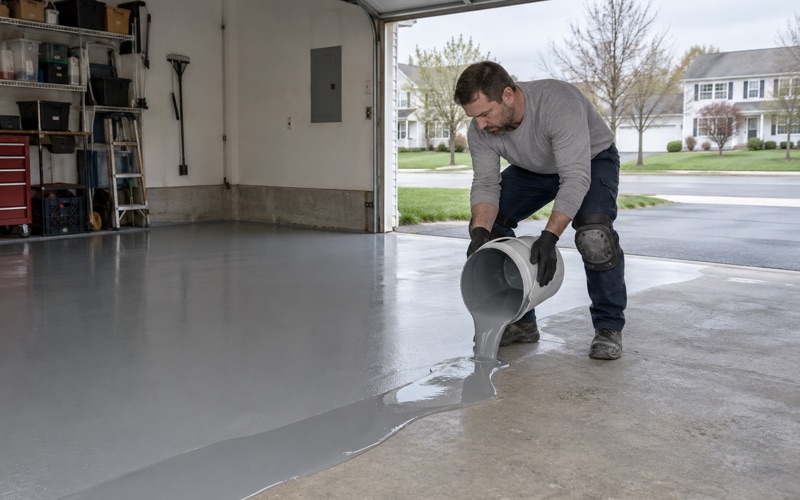
The cleanest window for coating a rental garage is the gap between one lease and the next, when nobody needs to park inside and the room can sit empty while the system cures. When the house is occupied, we tell the owner how many days the tenant will be without the garage and leave the arrangement to the owner. We do not shorten a cure because a car needs to come back in.
Removing what the last owner put down
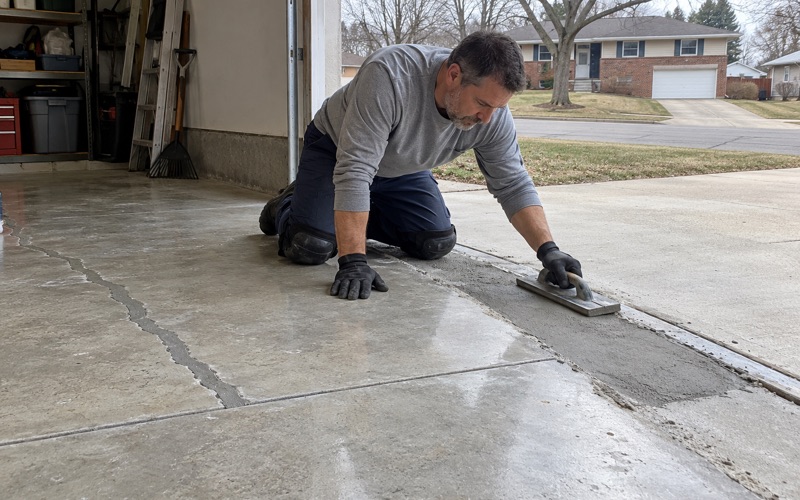
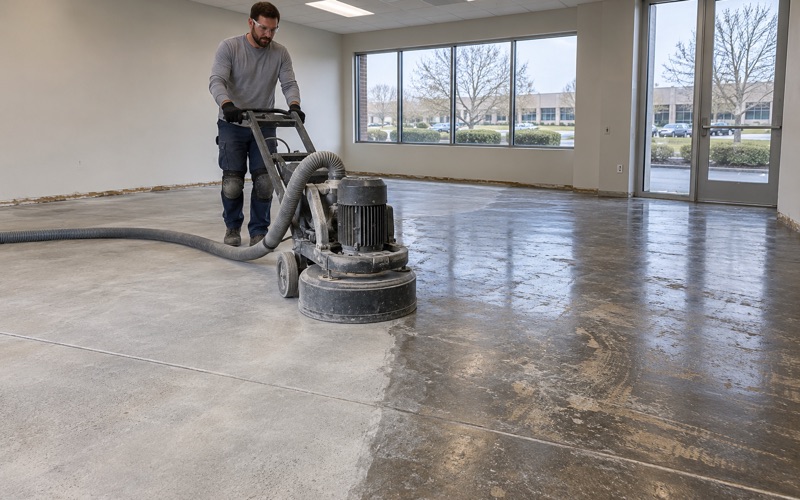
Peeling garage paint and failed roll-on kits are common on rental garages, and nothing new should go over them. We take the floor down mechanically with a diamond grinder or a shot blaster to a fresh profile measured against the ICRI CSP scale, and acid etching plays no part in how we work. Where the slab under the old film is cracked or spalled, the proposal says so and prices the repair as its own step.
Testing a slab nobody has tested
Garage slabs often have no vapor retarder beneath them, since IRC R506.2.3 exempts garages from that requirement. Rather than guess, we list moisture testing in the scope as a separate item, using an ASTM F1869 calcium chloride test or ASTM F2170 relative humidity probes depending on the slab. A high reading means a moisture-mitigation primer or a different system, and the owner hears that before signing anything.
What suits a rental garage
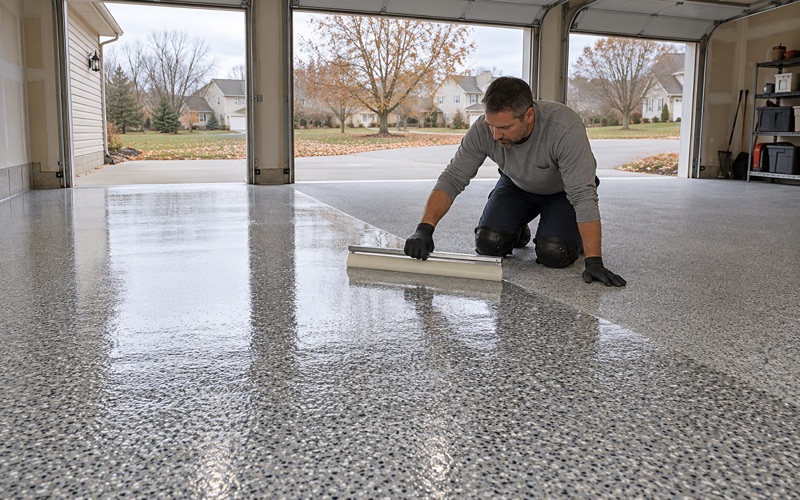
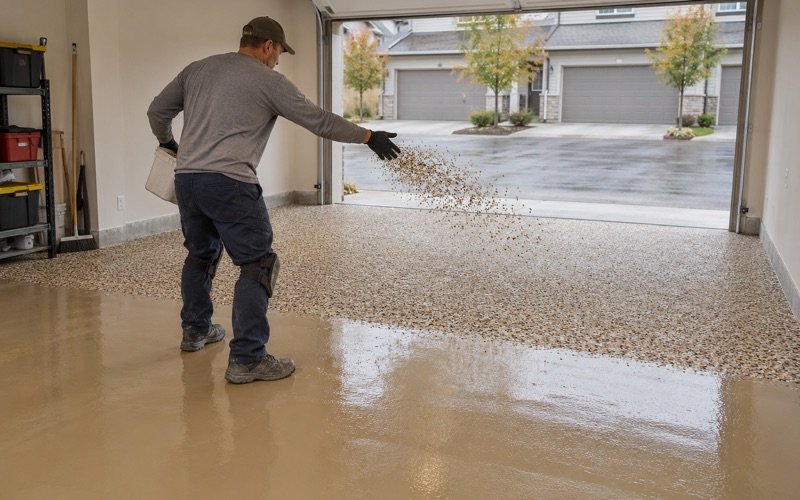
For a landlord, the useful floor is one that cleans up quickly at move-out and hides ordinary wear. A 100% solids epoxy base with a vinyl flake broadcast and a polyaspartic topcoat is a common build, because the flake masks scuffs and a well-bonded topcoat resists hot tire pickup. The written proposal names each product and the finished thickness, so an owner managing from across town can confirm what went down.
Apartment Buildings of 5 to 19 Units and Their Shared Floors
The 739 apartments in Lyons buildings of 5 to 19 units share their floors in a way a house does not. A basement laundry, a storage room, a utility corner and, where the building has one, a parking area all serve every tenant at once. Published counts do not say which of these buildings have garages or parking, so we judge each property by what is actually there.
Laundry rooms
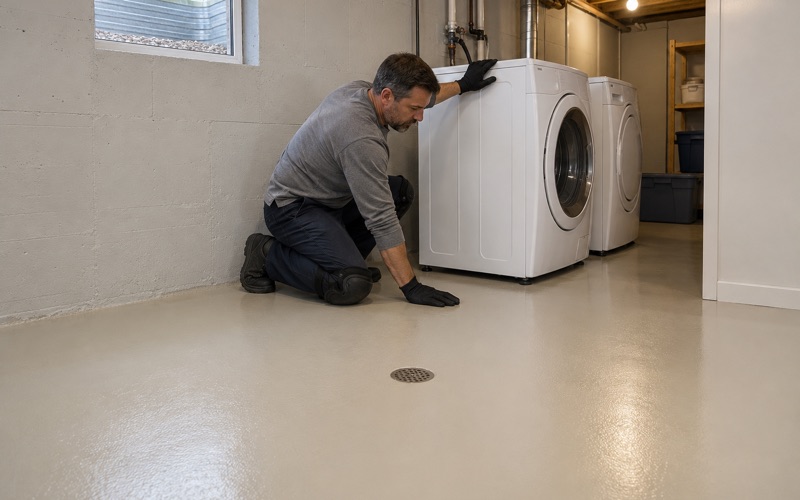
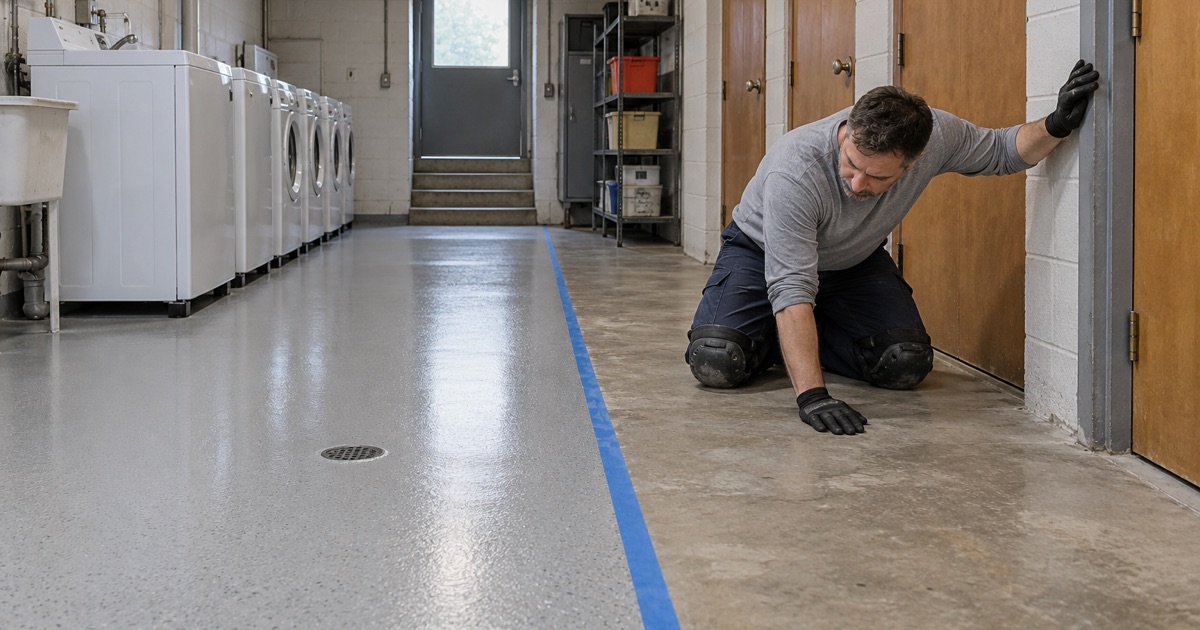
Shared laundry floors take standing water from leaks and overflows, detergent spills, and the vibration of machines that creep across the concrete. We give close attention to the floor drain and any sump pit, carrying the coating into the drain body so water runs off rather than working under the edge of the film. A quartz aggregate broadcast in the build gives traction on a floor that will sometimes be wet.
Storage rooms and corridors
Storage areas and basement corridors are mostly about dust and cleanability. Bare concrete sheds a fine powder onto everything stored on it, and a sealed floor makes routine cleaning far easier for whoever maintains the building. Where a full color system is more than a room needs, a lithium silicate densifier or a lighter clear build may be the better answer, and we say so.
Parking floors
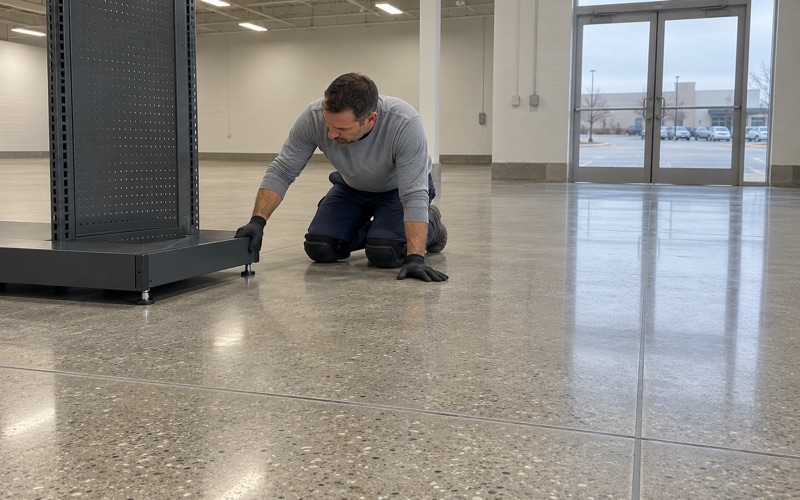
Where a building does have an enclosed parking floor, it carries more traffic than any single-family garage. Those floors need a heavier film and a careful look at joints and cracks, because a coating is a thin layer that follows the concrete and will not hold a moving crack closed. We put that limit in writing before the work, not after a crack shows through.
Keeping a building usable during the work
Tenants still need to do laundry and reach their storage while a building is being coated. We stage the work in sections where the layout allows, post the schedule with the owner’s approval, and allow full cure time before each area reopens. Larger properties, including the 156 Lyons units in buildings of 50 or more, can usually be phased room by room.
Property Maintenance, Occupancy and a Floor That Outlasts a Lease
The Village of Lyons Building Department, at Village Hall on 4200 Lawndale Avenue, handles plan review, permits and inspections, and it issues occupancy certificates. Among the codes it enforces is a property maintenance code, alongside the building, electrical, plumbing, sprinkler and accessibility codes.
Where the maintenance code fits
We have not read the floor language of that property maintenance code, and we do not present a coating as something it demands. Its presence does signal that the village keeps an interest in the condition of buildings over time, which is one reason owners keep basements and garages sound rather than patched over. A coating is a maintenance choice an owner makes, not a compliance document.
Asking before the work starts
Before a job goes on the calendar, we contact the village to ask whether coating an existing slab counts as decorating or needs a permit, and what the Building Department expects from a contractor working in Lyons. Illinois issues no state license for flooring or coating work, so those answers come from each village rather than from Springfield. An owner already working with the department on an occupancy certificate can raise the floor in the same conversation.
Paperwork, products and radon
On a house, the owner receives a written contract and the Home Repair: Know Your Consumer Rights pamphlet before we begin, as the Illinois Home Repair and Remodeling Act requires. The coatings we install fall within the VOC limits of 35 Illinois Administrative Code Part 223, Subpart C, which bind the installer as well as the manufacturer. We also do not sell a coating as radon reduction, since that work in Illinois needs an IEMA radon mitigation license.
Built to last past a lease
An owner judging a floor across several leases cares most about what can fail and what is excluded. We read the warranty exclusions aloud before the sale, moisture first, and we time curing to slab temperature and dew point rather than to a date on the calendar. A floor installed this way should still clean up well at the second or third move-out, not only the first.
- 20+ Years Coating Floors
- Moisture Tested Before Coating
- Written Contract on Every Home Job