
Schaumburg Epoxy Flooring installs flake epoxy floors in Schaumburg, IL, serving surrounding cities including Wood Dale, Bensenville, Barrington, Prospect Heights and Winfield. Flake is the finish on most of the garage floors we have coated over more than 20 years, because it hides dirt, adds grip and handles the salt, slush and hot tires of a suburban Chicago winter better than a plain color.
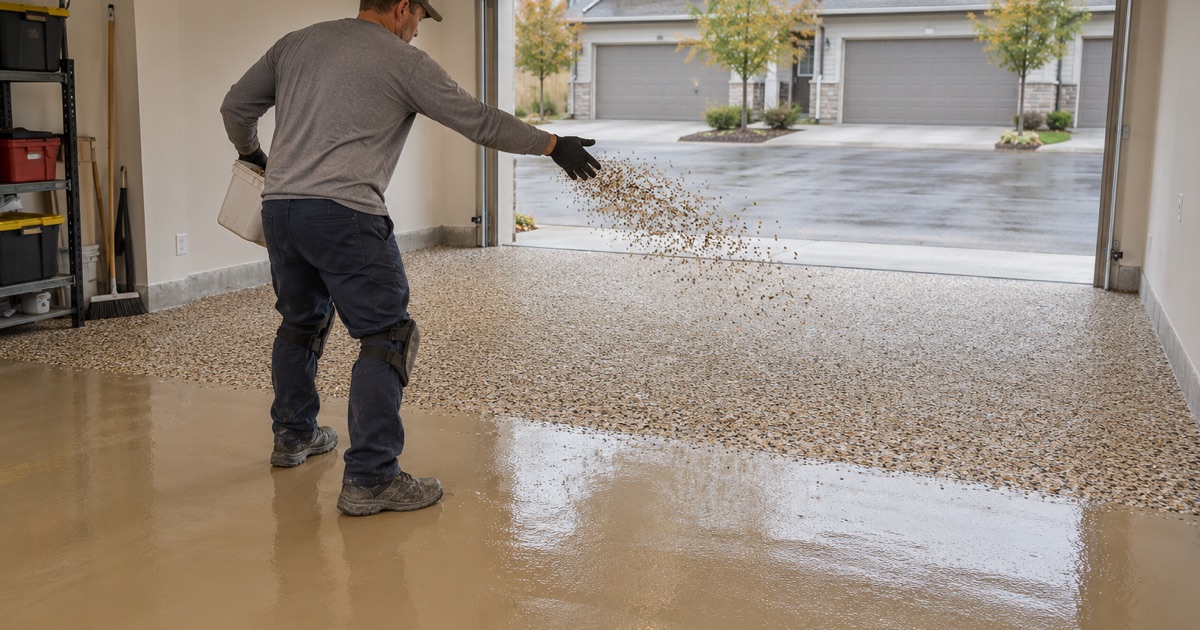
A flake floor is a layered system. A base coat goes onto diamond-ground concrete, vinyl chips are broadcast into it while it is wet, the excess is scraped off once it cures, and a clear topcoat seals everything in. The chips do not add strength on their own, but they add texture, visual depth and a forgiving surface that hides the dust and tire marks a solid floor shows.
We use flake floors in garages, basements, workshops, locker rooms, retail back rooms and commercial spaces where a durable, decorative, easy-care surface is wanted. Every flake floor starts with the same preparation as any coating we install: grinding, crack repair and a moisture test.
Flake Blends, Sizes and Broadcast Density
Choosing a Flake Blend
Flake blends mix three to six colors of vinyl chip, from cool grays and blacks to tans, browns and accent colors. Mid-tone blends hide road grime, salt film and tire marks best, while very light blends brighten a dark basement and very dark blends show dust. Blend names vary by manufacturer, so we bring physical boards rather than relying on a catalog photo.
We lay those boards directly on your slab and look at them under your actual lighting, both with the garage door open and closed. A blend that looks warm in daylight can read gray under LED fixtures, and that difference is easier to see in your space than in a showroom.
Chip Size and How It Reads
Chip size changes the look as much as color. Large chips create a bold, speckled floor that suits a big garage and hides small surface flaws. Small chips give a tighter, finer texture closer to stone, which suits basements, mudrooms and commercial spaces where a calmer floor is wanted.
Full Broadcast Compared With Partial Broadcast
In a full broadcast, chips are thrown into the wet base until it will accept no more, covering the whole floor. It gives the most texture, the best hiding and a thicker, more uniform build once the topcoat goes on. A partial broadcast scatters chips over a colored base, letting the base show through, and uses less material. Most of our garage floors are full broadcast.
The broadcast rate is also where a cheaper quote often hides. A floor described as a flake floor can mean a full refusal broadcast or a light sprinkle over gray paint, and from a sales photo the two can look similar. Our proposal states which one you are getting, along with the base product and the finished thickness, so the comparison with another bid is like for like.
Building a Flake Floor That Lasts
Grinding and Repair Under the Flake
The flake is only as good as the base it is set in, and the base is only as good as the concrete it is bonded to. We diamond grind every slab, remove old paint and sealer, and fill cracks and spalls. We never acid etch, because an etched surface leaves a weak, inconsistent bond that shows up as peeling in the tire paths.
The random pattern of a full broadcast hides repairs better than any other finish, which makes flake a good choice for older slabs with patches and filled cracks. A crack that is still moving will still telegraph through, though, and we point those out before the job.
Moisture and the Base Coat
A garage slab may have no vapor retarder under it, because the model building code exempts garages, and a basement slab sits on soil that holds water. We test moisture with an in-situ relative humidity probe or a calcium chloride kit before choosing the base coat. If the readings are high, a moisture-mitigation primer goes down first.
Scraping, Vacuuming and the Topcoat
After the base cures, loose chips are scraped and vacuumed off, and the high points of standing flakes are knocked down so the topcoat goes onto an even surface. The clear topcoat then seals the chips. Its thickness decides how smooth or textured the finished floor feels, and we can add a fine aggregate in wet areas.
Temperature matters at this stage too. The base has to cure hard enough to scrape before the topcoat goes on, and the topcoat needs a slab comfortably above the dew point to bond. In a cold garage both steps slow down, which is why we measure the slab rather than the air and why some winter jobs move to spring.
Where Flake Floors Work Best
Garages in a Salt-Belt Winter
Calcium chloride and rock salt ride into the garage on tires all winter. A full broadcast flake floor under a chemical-resistant polyaspartic topcoat keeps that brine on the surface and hides the salt film between cleanings. Its texture also gives tires and boots better grip than a smooth coating when the floor is wet.
Townhome garages benefit as well. Associations often limit colors and work hours, and a neutral flake blend usually satisfies the rules while still giving each owner a finished floor. We confirm approvals before scheduling.
Basements, Laundry Rooms and Workshops
In a basement, flake floors give a clean, finished look that hides dust and wears well under kids, tools and laundry baskets. In a workshop, they resist oil and dropped tools better than paint and are easy to sweep. Near a washer or floor drain, a textured topcoat adds safety where water collects.
Commercial Back Rooms and Locker Rooms
Locker rooms, break rooms, retail stockrooms and showroom service areas use flake floors for durability and easy cleaning without the industrial look of a plain gray coating. Floors that stay wet get a slip-resistant texture, and every product we use is chosen within Illinois’ VOC limits for floor coatings.
- 20+ Years Coating Floors
- Moisture Tested Before Coating
- Written Contract on Every Home Job